01
Exposure report
Explains which fields are already public and cites concrete transactions as proof.
VEIL Scan / 01
Paste a Solana address. See the digital trail your public transactions already published — counterparties, programs, amounts, memos, and logs. The scanner reads mainnet. It does not deanonymize anyone.

For the holder
Solana transactions already contain involved accounts, invoked programs, and state changes. VEIL Scan turns those fields into findings a person can read — without connecting a wallet.
For the builder
Memos, program logs, and leftover instruction bytes are public. The debugger highlights those leaks so you can stop encoding user data into the ledger.
How a scan works
Live scans hit public Solana endpoints, then fall back if one is rate-limited. Set SOLANA_RPC_URL in production if you need a dedicated quota. The sample report at /scan/demo stays available even when RPC is down. The full pipeline — RPC methods, evidence, and why a transfer is not a shared owner — is on How it works.
01
No wallet connect. No signature. VEIL Scan never asks for a private key or an approval.
02
The scanner calls public Solana RPC (or SOLANA_RPC_URL if you set one) for confirmed history on mainnet-beta.
03
Account keys, program ids, balance changes, memos, inner instructions, and program logs come back as JSON.
04
Findings, a transfer map, an apps list, evidence rows, and a debugger — each claim links to an explorer signature.
Example addresses
These are public mainnet accounts, labeled so they are not mistaken for private people. Each link runs a live scan of the last 100 signatures.
Exchange hot wallet
A labeled Binance-related mainnet wallet with dense public transfers. Use it to see a busy trail — not a private person.
Scan 5tzFki…UvuAi9USDC mint
A token mint, not a user wallet. The report shows mint-side public traffic so you can tell program accounts from people.
Scan EPjFWd…yTDt1vThe first slice
01
Explains which fields are already public and cites concrete transactions as proof.
02
Draws visible links between addresses. A transfer is not proof of a shared owner.
03
Shows which recognized programs the address called — swaps, markets, staking, bridges.
04
Helps developers see memos, logs, and instruction payloads their app left on-chain.
Inference limits
The scanner will not invent an owner, a passport, or a KYC file. Practical questions — wallet connect, storage, Zcash — are answered on the FAQ. The method is on How it works.
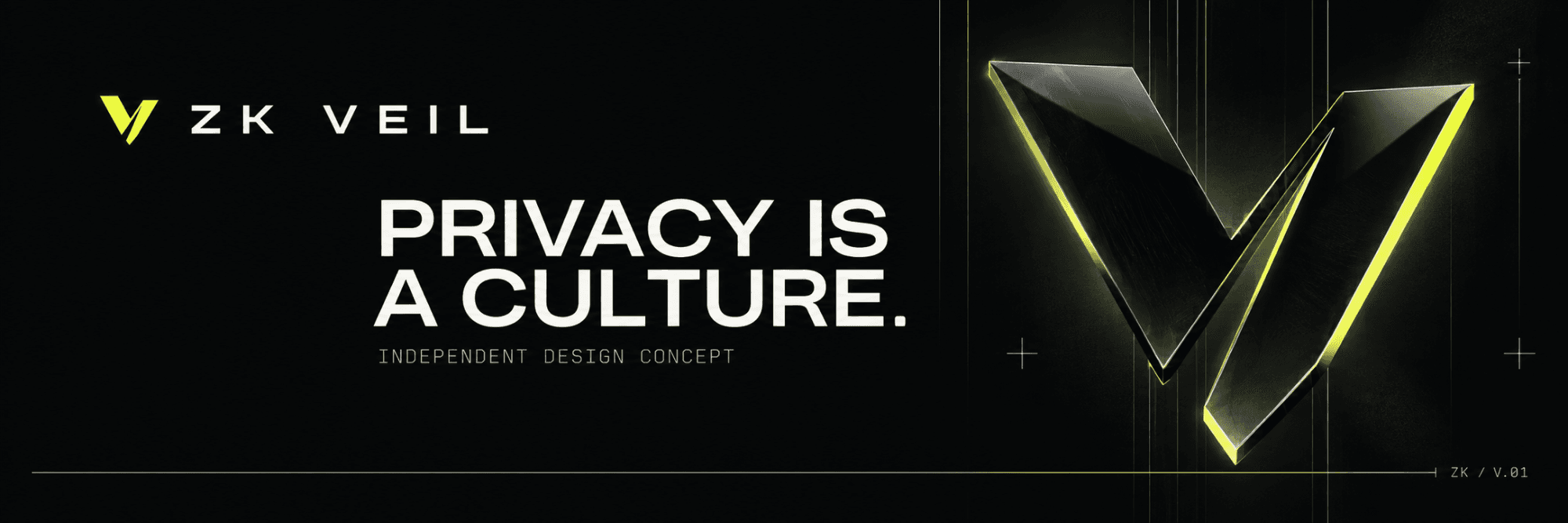
Privacy is a culture
This MVP is educational, not a Zcash integration. Zero-knowledge proofs can show that a transfer is valid without publishing sender, recipient, or amount. Solana still publishes those fields unless an application deliberately avoids them.
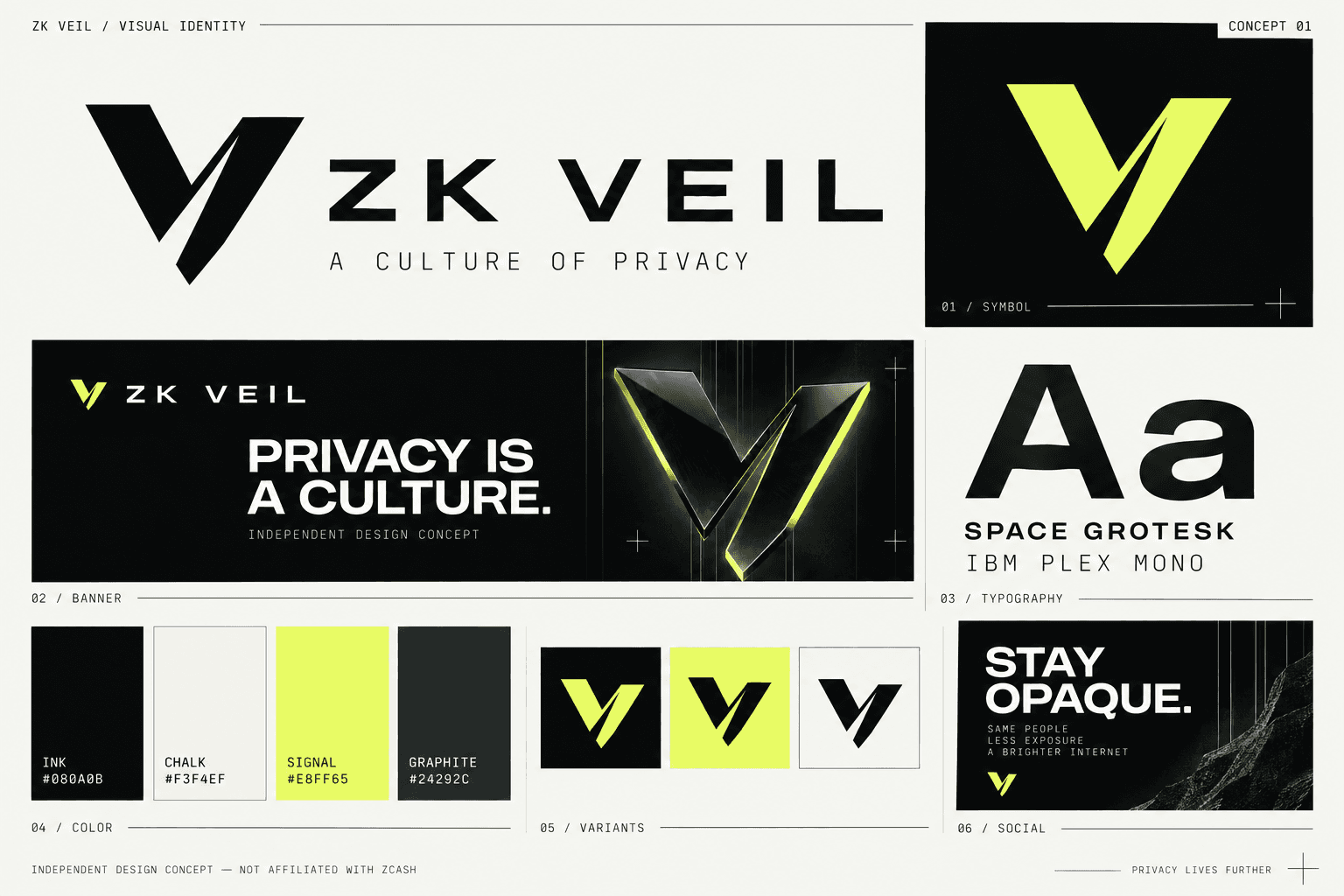
01 / Visual identity
The rest of the surface
The report is the product. These pages are the surrounding map: what ZK VEIL is, how the scanner reads RPC, what it will not claim, and how builders inspect leaks.
01
Independent concept. Culture of privacy. No token, no wallet connect, no Zcash affiliation.
Read about →02
Paste an address, read 100 signatures, parse public fields, cite every finding. Transfer ≠ owner.
See the pipeline →03
Does this dox me? Do I connect a wallet? Is data stored? Is a paid API coming?
Open FAQ →04
Ledger fields, methodology, and a side-by-side with shielded transfers — plus first-party links.
Read the notes →05
Leak patterns, POST /api/scan, and what the debugger is for when your app writes the chain.
Open developers →06
How findings, transfer edges, and the 0–100 exposure score are derived — and what they refuse to claim.
Read the contract →07
Signatures, fee payers, memos, shielded transfers, viewing keys — the words on the report.
Open glossary →08
No account, no wallet connect, on-demand reports. A scan URL is still a public-key lookup.
Read privacy →09
The same four views on fixture data, available even when public RPC is rate-limited.
View demo →The public report is the product people need first. Developer APIs, CI checks, and deeper debug traces can be paid later. A token is not required for that model. Storage, wallets, and Zcash affiliation are covered in the FAQ.